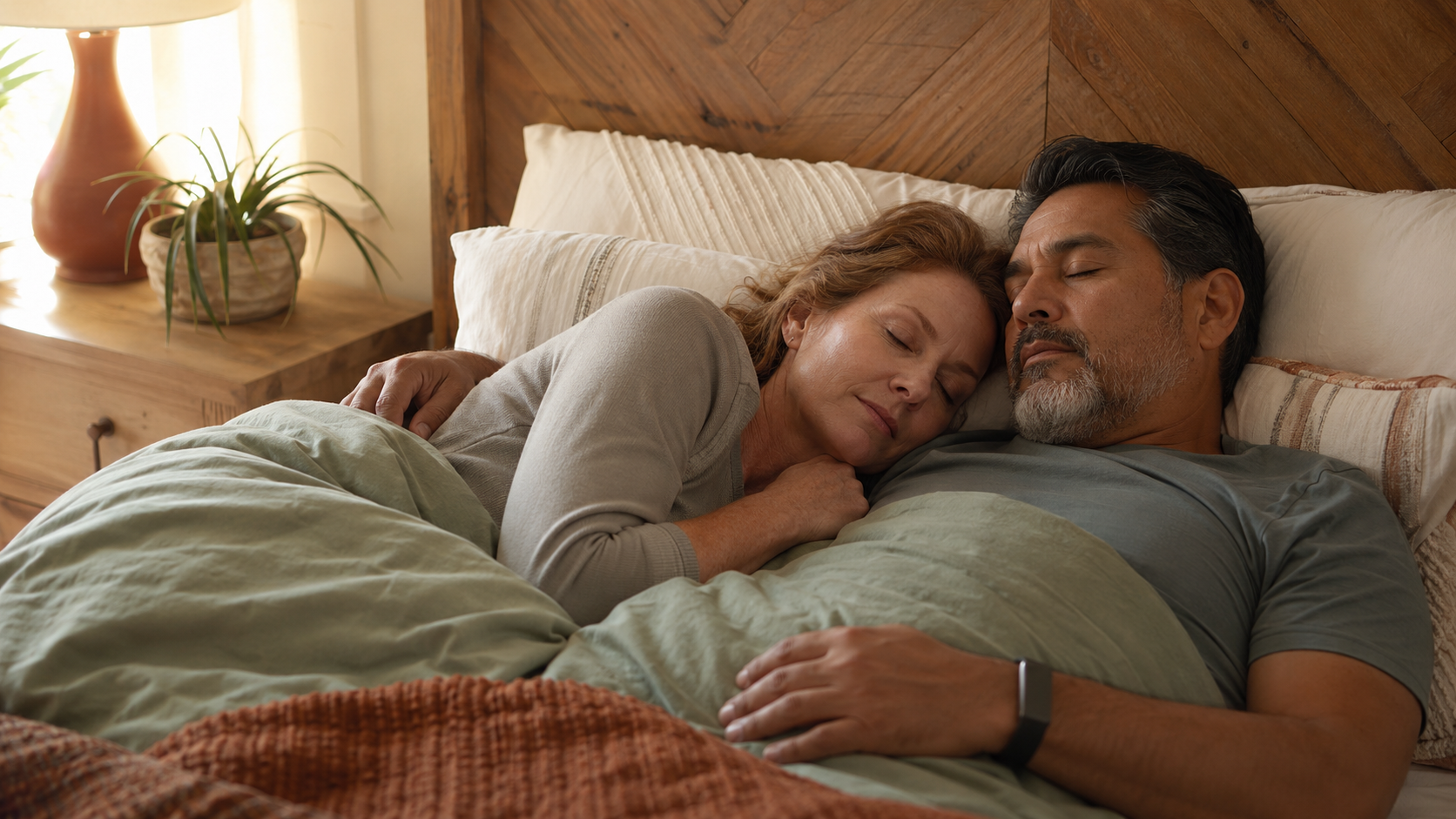
Sleep is a relationship issue
Sleep is often treated as an individual health habit, but its effects do not stop with the individual.
When one or both partners are chronically tired, couples may experience:
- More irritability and defensiveness when trying to discuss
- Less patience and empathy with each other
- Difficulty concentrating during important conversations
- Reduced interest in affection or sexual intimacy
- More negative interpretations of each other’s behavior
- Greater difficulty repairing after conflict
- Unequal resentment surrounding bedtime, childcare, snoring, or household responsibilities
A tired nervous system has fewer resources available for curiosity, flexibility, and connection. It becomes easier to react automatically and harder to pause long enough to understand what is happening beneath the conflict.
In Emotionally Focused Therapy, couples learn to recognize the vulnerable emotions and attachment needs hidden underneath anger, criticism, withdrawal, or defensiveness. Gottman-informed therapy similarly helps partners manage physiological overwhelm, communicate more gently, and repair emotional injuries.
Those skills are much harder to practice when the brain and body are running on inadequate sleep.
Creating a more sleep-supportive relationship
Couples can work together to create conditions that support a good night’s sleep.
Consider asking each other:
- What makes it difficult for you to settle at night?
- Do you feel supported—or alone—with the responsibilities that affect your sleep?
- Are we trying to resolve difficult issues when one or both of us is already exhausted?
- What evening routines help each of us feel calm and connected?
- Is there one practical change we could make together this week?
A shared wind-down routine might include dimming the lights, reducing screen use, listening to calming music, exchanging a gentle touch, practicing slow breathing, or agreeing to postpone complicated conversations until both partners are rested.
Importantly, going to bed angry is not always the worst option. Trying to force a resolution while both partners are emotionally flooded and sleep-deprived can do more damage. Sometimes the healthiest response is: “I care about this, and I care about us. Let’s rest and come back to it tomorrow.”
Other Topics Around Sleep Hygiene:
Poor Sleep Hygiene Effects Both Partners
If sleep difficulties, exhaustion, or nighttime stress are affecting your relationship, Spot on Relationships can help. Michaela Conley is trained in Cognitive Behavioral Therapy for Insomnia (CBT-I) and integrates sleep-focused strategies with EFT- and Gottman-informed couples therapy.