
Your ACE Score Can Be Helpful in Couples Therapy
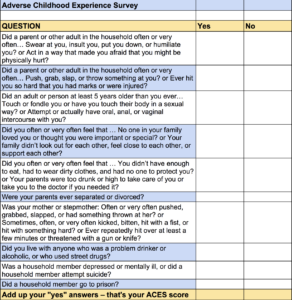 The Adverse Childhood Experiences (ACE) questionnaire can allow you and your partner to understand how earlier life experiences might affect coping skills, communication styles, emotional regulation, and relationship tendencies today. It doesn’t mean your partner’s childhood causes relationship problems. Instead, the questionnaire might offer insight into certain reactions that might otherwise feel inexplicable. For instance, pulling away when a conflict comes up, shutting down, reacting extremely defensively, struggling to trust your partner or feeling flooded by minor disagreements may have developed as ways to feel emotionally safe in the past. Knowing these tendencies exist can help couples overcome shame and replace blame with curiosity. Couples can stop asking, “What’s wrong with my partner?” and begin asking, “What happened?” and “What do each of us need to feel safe and connected?”
How ACE Scores May Be Used In Therapy Your therapist may use this conversation to: * Learn more about current anxiety, depression, trauma symptoms, sleep issues, substance use, relationship issues, or stressful life events. * Tailor treatment to emphasize safety, trust, choice, collaboration, and empowerment.
- Note resilience factors like supportive connections, healthy coping skills, community resources, and positive childhood experiences.
- Help partners find healthier ways to cope with stress, communicate, repair conflicts, and regulate emotions.
- Discuss whether additional trauma-focused therapy or medical, mental health, or community resources could be beneficial.
Important Limitations
The ACE questionnaire is not a diagnostic tool. It doesn’t take into account how severe or long-lasting an experience was or how frequently it occurred. The ACE score also cannot predict if someone will develop health issues or if a relationship will work. Having a high ACE score does not mean someone is damaged or unable to recover from past pain. Instead, use the score as a starting point to have compassionate conversations with your partner – not as a label you place on them or yourself. Understanding your partner’s past can allow you both to approach your current relationship with more awareness, empathy, and choice.
Origination of the ACE Questionaire
The ACE (Adverse Childhood Experiences) questionnaire was developed to screen for common childhood experiences that can lead to toxic stress responses that persist into adulthood and harm health and well-being.
Rooted in the landmark CDC–Kaiser Permanente ACE Study of the 1990s, the tool was originally developed when researchers sought to understand why so many adults were affected by health problems—including mental illness, substance use disorders, and chronic disease—even after they received treatment as adults for their medical conditions.
Goals of the questionnaire included the ability to:
- Screen for exposure to childhood abuse, neglect, and household dysfunction
- Measure the overall burden of those experiences
- Research how those experiences are linked to adult physical illness, mental illness, substance use, and interpersonal problems
- Raise awareness and drive trauma-informed prevention and care.
The study revealed what is now known as a dose–response relationship: As ACE score increased, so did risk for many categories of later problems.
The ACE score is a risk factor on a population level — not a diagnosis or predictor of one individual’s outcome. Because the score does not take into account severity, timing, family support, resilience or positive childhood experiences, it should never be used to label or define a client.